
Bloomington, IL · Garage Door Service
Which Garage Door Sounds Are Normal Here, and Which Aren't
Most Bloomington garages date to the 1960s and 70s, and cold winters turn worn hardware noisy fast. Here's which sounds to watch and which can wait.
- Repairs & new doors
- Springs & openers
- Serving 5 nearby communities
When Waiting Is Fine
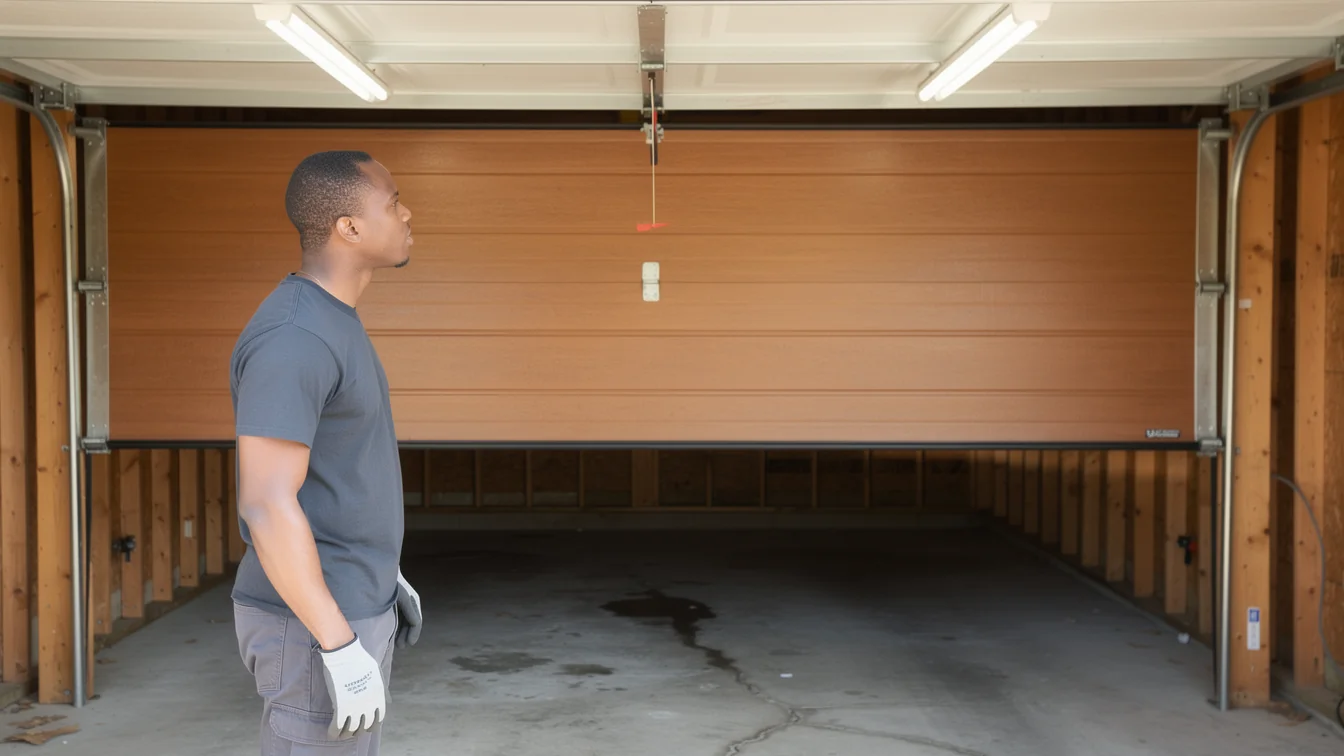
A door that creaks once on a cold morning and then runs quiet the rest of the day isn't broken. Steel contracts in low temperatures, and a lot of the housing stock here went up between 1945 and 1992, with the bulk of it from the 1960s and 70s. That means original track and roller setups that were never built with today's nylon rollers in mind. A little groan on the first open of the day, especially once we're into a hard freeze, is just metal finding its clearance again. Same goes for a faint rattle in the panels on a windy day - these doors are decades old in a lot of neighborhoods, and loose screws on the hinges are a five-minute fix, not an emergency. If the door opens and closes at the same speed it always has, and the sound doesn't change or get louder week to week, you can put off the call. Write the date down if it bothers you, and check again in a month. If it's the same noise, it's probably mechanical wear settling into a pattern, not a part about to fail.
The Situation
The doors we open most often in this area are original to houses built in the 1960s and 70s, which puts a lot of torsion springs and bearings well past their expected cycle count even if nobody's touched them. That hardware wasn't designed to last fifty winters. Add in a cold climate that puts real thermal swing on steel tracks and lubricant, and you get noise profiles that are specific to older housing stock in a cold region - not the kind of thing you'd hear the same way in a newer subdivision with double-insulated doors and sealed bearings. A grinding sound from the spring area, a loud bang on opening, or a door that shudders partway up are all signs tied directly to age and temperature, not random chance. We see this pattern across the older sections of town and in the smaller surrounding places too - Towanda, Downs, Hudson - where the housing is a similar vintage.
The Common Mistake
The mistake we see most is spraying WD-40 on a noisy spring or track and calling it fixed. WD-40 is a solvent, not a lubricant - it strips what grease is left on old hardware and the noise comes back worse in a week, usually right as the temperature drops again. On a door this age, a squeal from the spring coils almost always means it's lost tension or started to corrode, and no amount of oil fixes that. The other mistake is ignoring a noise that's gotten louder over successive closings. A sound that's new, or one that's changing week over week, isn't settling hardware - it's hardware failing. We won't tell you every noise needs a truck out here; plenty don't. But a noise that's progressing, especially on a torsion spring carrying a door this old, is the one case where waiting costs you a cable snap instead of a spring swap.
How Local Conditions Play In
Cold is the variable that changes everything here. In a moderate-cold climate, lubricant thickens, steel contracts, and openers work harder to pull a door that's slightly stiffer than it was in August. That's normal physics, and it's also why a door that was silent all summer can start talking to you in December. Combine that with 1960s and 70s-era torsion hardware that was never rated for today's heavier insulated panels if a door's been upgraded, and the cold snap becomes the moment weak points show up. We're not going to pretend every town handles this the same - the housing age and the climate band here are specific, and they're the reason a noise that would be nothing in a newer, warmer-climate build is worth a second listen in a house built in 1968 on the north side of town.
Frequently asked questions
My garage door squeaks every morning in winter but runs fine the rest of the day - is that a problem?
Usually not. Cold mornings make old steel and stiff lubricant squeal on the first cycle, especially in houses from the 1960s and 70s. If the noise disappears after the first open and doesn't get louder over weeks, it's thermal, not mechanical failure. Keep an eye on it, but you don't need to call.
What noise actually means I should call someone?
A loud bang, a grinding sound near the spring, or a noise that's gotten louder over several closings in a row. Those point to a torsion spring or bearing giving out, which is common in doors from this era that have carried decades of cycles. Progressing noise, not steady noise, is the signal.
Will spraying lubricant on a noisy spring fix it?
Not if it's WD-40 - that's a solvent and it strips what grease is left, which makes the noise worse within days. On hardware this old, a squealing spring usually means lost tension or corrosion, and that needs replacement, not oil.
Related garage door services in Bloomington
More garage door guides
Book garage door service in Bloomington
Call now or request a quote - tell us what the door is doing and where you are.