
Bloomington, IL · Garage Door Service
What Power Outages Do to an Older Bloomington Opener
In Bloomington, IL, older openers and power outages don't always need a truck today. Here's what 1960s-70s housing and cold winters really mean for your door.
- Repairs & new doors
- Springs & openers
- Serving 5 nearby communities
When Waiting Is Fine
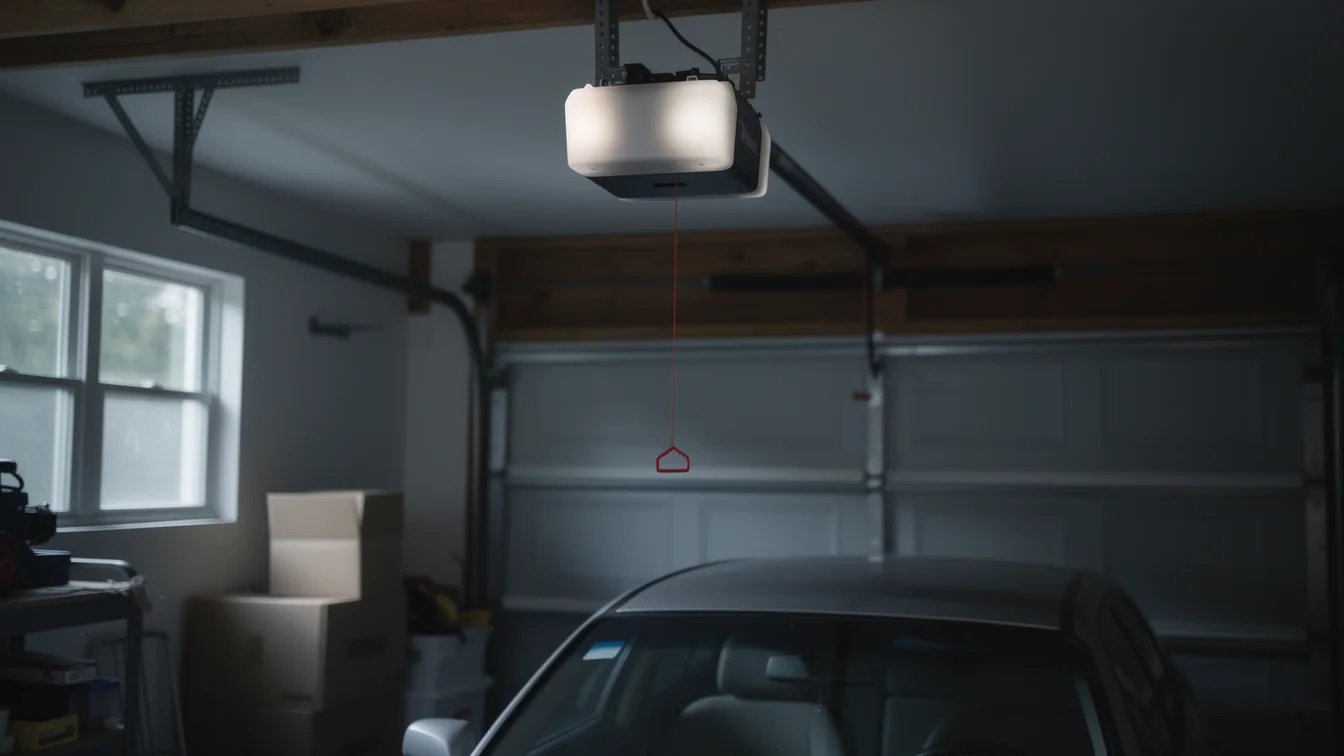
If the power goes out and your opener goes dark, that's not automatically a repair call. Every opener built for a chain or belt drive has a manual release cord - pull it, and the trolley disengages from the rail so you can lift the door by hand. On the bulk of the housing stock in this area, built between 1945 and 1992 with most of it dating to the 1960s and '70s, that release cord is original equipment or a direct retrofit replacement, and it still works the way it was designed to. If the door lifts smoothly by hand once you've pulled the cord, you don't need us tonight. Reset the opener once power's back, re-engage the trolley, and test it on a full cycle. The exception is a door that won't lift by hand at all, or one that drops fast once released - that's a spring problem, not a power problem, and it won't wait. But a dead opener with a door that moves fine manually is a wait-it-out situation, not an emergency.
The Situation
Most of the houses we work on here went up between 1945 and 1992, with the heaviest concentration from the 1960s and '70s spread across the fifteen or so pockets that make up this service area. That era of construction means two things for openers specifically. First, a lot of these units weren't installed with the house - they were added years or decades later, which means the circuit feeding the opener is often shared with garage lighting or an outlet rather than wired on its own breaker. Second, this area sits in a cold moderate climate band, and cold snaps here put real strain on the grid at the exact time of year when a stuck door matters most. Put those two things together and you get a pattern we see a lot: the opener trips its shared breaker during a cold-weather power event, and the owner assumes the opener itself failed when the breaker is the actual problem. It's worth checking the breaker before you assume the motor or circuit board is dead.
The Common Mistake
The mistake we see most is forcing the door before disengaging the trolley. When the power outages out mid-cycle, people grab the bottom panel and push, which puts the full load against a chain or belt that's still connected to a motor that isn't moving. On the older torsion setups common in this 1960s-70s housing stock, that strain can bend the trolley arm or pull the rail bracket loose from a ceiling joist that's already seen fifty-plus years of settling. The second mistake is wiring a generator straight into the opener's outlet during an outage without isolating the circuit first - not a garage door problem specifically, but one we hear about after the fact more than we'd like. The honest answer here: if you're not sure whether your opener is on a dedicated breaker or a shared one, that's worth five minutes with a flashlight before the next cold-weather outage, not after the trolley's already bent.
How Local Conditions Play In
Cold moderate winters do two things to a garage door system at once, and they tend to land on the same night. The first is mechanical - spring steel loses a little flex as temperature drops, so torsion springs on doors from this housing stock's era run tighter and heavier in January than they do in July, which changes how much resistance the opener's motor has to fight against. The second is electrical - the same cold snaps that tighten a spring are often the ones straining the grid enough to cause the outage in the first place. So when an opener quits during a cold-weather power outage, you're sometimes dealing with a door that's already harder to lift by hand than it would be in warmer weather, right when you need the manual release to work smoothly. That's worth knowing before you're standing in a cold garage at 6 a.m. with a dead opener and a door that feels heavier than you remember. We don't carry a battery-backup retrofit that fits every opener model from this era, so for some of these units, manual operation during an outage is the only backup there is.
Frequently asked questions
My opener won't work after a power outage but the door lifts fine by hand - do I need a repair?
Not necessarily. Pull the manual release cord, lift the door by hand to confirm it moves freely, then wait for power to return and reset the opener. If the door only won't move because the opener has no power, that resolves itself once the outage ends and you reset the unit.
Why does my garage door feel heavier in cold weather right before the opener quits?
Torsion springs in this area's housing stock run stiffer in cold weather, which changes the load on your opener's motor. If a power outage hits at the same time, you can end up with a heavier-than-usual door and no motor to help lift it - a combination that's more common here in winter than other seasons.
Should I wire my opener into a generator circuit during an outage?
Not without an electrician isolating the circuit first. Feeding a generator into a shared breaker that also runs garage lighting or an outlet is a real risk on the older wiring common in homes from this area's main building era, and it's outside what we handle as a garage door company.
Can I just unplug and replug the opener after an outage?
Usually, yes - most units reset on their own once power is restored, and a quick unplug-replug clears a stuck control board. If it still won't respond, check the breaker it shares before assuming the motor failed.
Related garage door services in Bloomington
More garage door guides
Book garage door service in Bloomington
Call now or request a quote - tell us what the door is doing and where you are.