
Bloomington, IL · Garage Door Service
Garage Door Service for Normal's Newer Housing Stock
Normal's housing mostly dates to the late 1980s, newer than Bloomington's older stock. We travel 3 miles from Bloomington to work on the doors and openers that era actually has.
- Repairs & new doors
- Springs & openers
- Serving 5 nearby communities
What Was Built Here
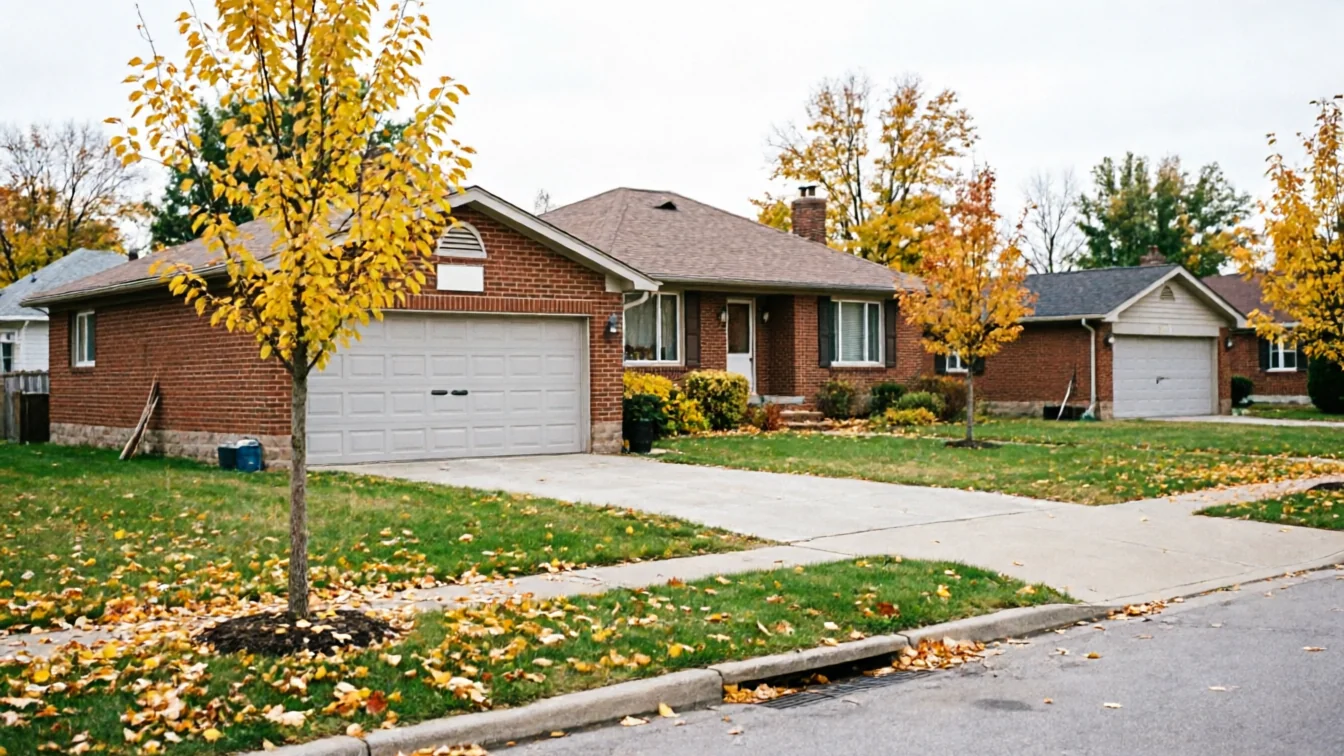
Normal's median house dates to around 1989, which puts most of this town a full generation newer than the 1945-1992 range you'll find across the wider Bloomington service area, where the typical build year lands closer to 1970. That gap matters more than it sounds like it should. A house built in 1989 came with a garage door and opener designed for a different set of codes and a different set of expectations than one built in the 1960s. Steel sectional doors with factory-installed extension or early torsion spring setups were standard by then, not the older single-panel doors with side-mounted hardware that show up in the 1960s-70s pockets elsewhere in the area (per F1, F2). Openers from this period are chain-drive, often the first generation with a safety reversal sensor required after 1993 federal rules, so some of the oldest Normal openers may predate that sensor and need a look. If your house here is one of the handful built before the late 1980s wave, your door and opener are more likely to be the exception than the rule.
Common Jobs Here
Because Normal's housing clusters later than Bloomington's older sections, the calls we get from this town skew toward wear-and-use problems rather than the hardware-replacement jobs that come out of older stock. Torsion springs on late-80s and 90s doors are usually standard-sized and easy to source, so a broken spring here is typically a same-part swap, not a hunt for something discontinued. Rollers and cables on doors installed around 1989 are reaching the point where 30-plus years of cycles start to show: nylon rollers cracking, cables fraying at the drum. Opener issues are common too - circuit boards and drive gears on chain-drive units from that generation are past their expected service life. We also see double-door track misalignment on wider garage openings, which were more common in builds from this period than in the narrower single-car openings typical of older area housing.
What That Means for Doors
A door built around 1989 was engineered with a working assumption of cold-climate loads - this area sits in a moderate cold climate band, with real winter swings that stiffen lubricant and shrink metal tolerances. On a newer door, that mostly shows up as a slow-closing door in January or a torsion spring that feels tighter than summer. It's a maintenance issue, not a structural one, on housing this age. Where it gets more serious is on panels or tracks that have taken impact damage; steel from this era dents rather than cracks, and a dented panel on an otherwise sound 1989 door is almost always worth repairing rather than replacing, since the rest of the door and hardware are still within useful life. That's the honest limitation here: we won't push a full door replacement on a Normal house just because the opener is old. If the track, springs, and panels are sound, swapping the opener alone is usually the right call and the cheaper one.
Old Streets and New Ones
We run this route out of Bloomington, about 3 miles to Normal, which keeps most of this town within a short drive regardless of which side of it you're on. Normal sits closer to us than the other towns we reach in this area - Downs, Towanda, and Hudson are each roughly 7 to 9 miles out, and towns like Le Roy, Stanford, and Lexington run 14 to 15 miles. That proximity doesn't change the work itself, but it does mean there's no real excuse for a slow callback when the job is a few minutes away. What does change the job is the mix of streets: newer subdivisions built in the late 1980s and 90s sit alongside a smaller number of older sections, and the door, spring, and opener type depends on which one a given house landed in, not on the town's name on the sign.
Frequently asked questions
Is my garage door opener too old to be safe?
If your house in Normal was built around the late 1980s and the opener hasn't been replaced, it's worth checking for a working photo-eye safety sensor - federal rules required those starting in 1993, so an original-to-house opener from just before that date may not have one. We can test it when we're out.
Do you repair dented panels instead of replacing the whole door?
Yes, when the track and springs are still sound. Steel panels from houses built around 1989 tend to dent rather than crack, and a single dented panel is usually a cheaper fix than a full door swap - we'll tell you honestly which one your door needs.
How far is it from Bloomington to get to my house?
Normal is about 3 miles from our Bloomington base, closer than most of the other towns in our coverage area. Distance doesn't change the price of the job, but it's one of the shorter drives we make.
Are parts for a 1989-era garage door hard to find?
Generally no. Torsion springs and standard hardware from the late 1980s and 90s are common sizes that are still widely stocked, unlike some of the older single-panel doors found elsewhere in the service area. That's one reason jobs on this type of door tend to be quicker.
Garage door services in Normal
Every service our crew runs in Normal, IL.
Book garage door service in Bloomington
Call now or request a quote - tell us what the door is doing and where you are.