Bloomington, IL · Garage Door Service
Garage Door Opener Installation Around Bloomington
Opener installation for Bloomington's 1960s-70s housing stock, matched to cold-climate demands across the 15-town service area. Straight talk on parts and failure causes.
- Repairs & new doors
- Springs & openers
- Serving 5 nearby communities
What You Pay
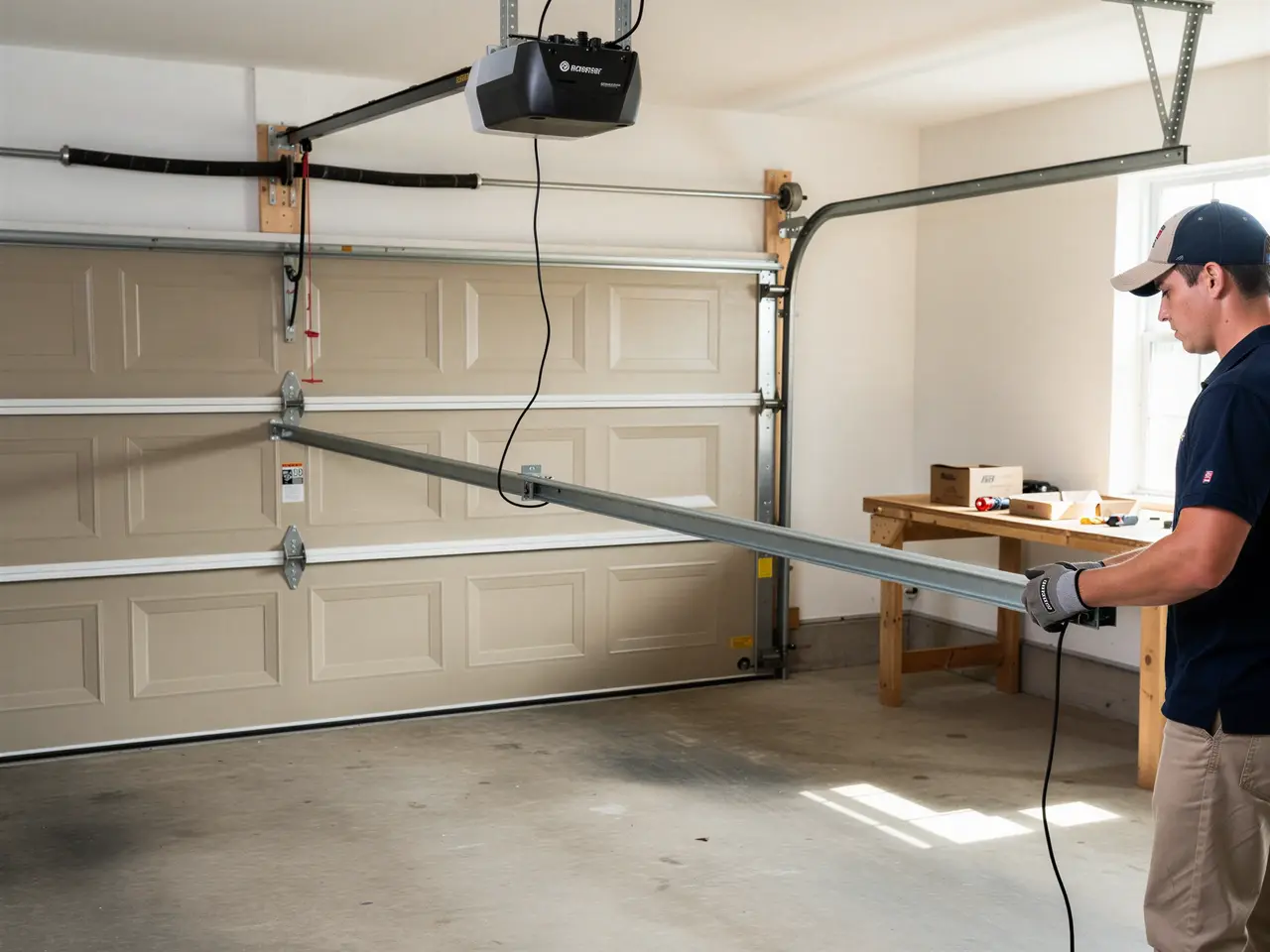
We don't quote a number here because the right opener for a house built in 1958 isn't the right opener for one built in 1988, and the drive type, horsepower, and mounting all shift the job. What we can tell you is what moves the price: whether you're keeping the existing track and springs or replacing them too, whether the wiring in the garage still matches current code, and whether the unit is a straight swap or needs new header bracket work because the old opener was bolted to framing that doesn't match today's mounting hardware. Homes across this service area were mostly built between 1945 and 1992, with most of the stock dating to the 1960s and 70s, so a lot of garages still have the original framing and wiring from that era. That's the part that adds time to a job more often than the opener itself does. Ask for a walk-through quote before you commit to a model - a fair shop will look at your actual track and door before naming a figure, not just the opener box.
Parts We Carry
We stock belt-drive and chain-drive openers in the horsepower ranges that fit the doors common to this area - single doors and the wider double doors both show up across the 1960s and 70s-built neighborhoods here. We carry the mounting hardware that matches older header configurations, since a lot of garages from that build era weren't framed with today's standard opener bracket spacing in mind. We also keep cold-rated lubricant and weatherized wiring harnesses on the truck, because a Midwest cold-moderate climate band means openers here see real temperature swings between a hot attic in July and a sub-freezing garage in January, and that swing is hard on seals and gear lube alike. One honest limitation: specialty drive units for unusual ceiling heights or oversized commercial-style doors sometimes aren't in stock and have to be special-ordered, which can add a few days to the job. We'll tell you up front if your situation falls into that category rather than swapping in something that's close enough.
What Causes It Around Here
Most opener failures we see tie back to two things: age of the housing stock and the cold. With median construction around 1970 across this service area, a lot of openers still running are well past a normal service life, and their gearing, capacitors, and safety sensors were built to a much older standard than what's sold today. The cold makes it worse. A moderate-cold climate band means openers cycle through real freeze-thaw swings every winter, and that stresses chain tension, gear lube viscosity, and the drive belt's rubber composition in ways a milder climate never would. Garages that aren't insulated - common in houses from this era - see the opener's motor housing go from a warm afternoon to well below freezing overnight, and that thermal cycling is what cracks old gear housings and gums up lubricant that was never rated for the swing. None of this is unique to one house; it's a pattern tied to when this area's houses went up and what the winters here do to a motor sitting in an unheated garage for six months a year.
How It Shows Up
The most common call we get isn't a dead opener - it's one that's starting to fail and the owner isn't sure yet. The door hesitates partway up, especially on the first cold morning after a hard freeze. The motor runs louder than it used to, a grinding or humming that gets worse as the weeks go on. Remotes start needing two or three presses before the door responds, which is often a sign the logic board is struggling, not the batteries. In houses from the 1960s and 70s stock that makes up most of this area, we also see openers that simply stop reversing safely - the door doesn't back off when it hits resistance - which on an older unit usually means the drive train has worn past the point where sensors or limit switches are doing their job. If your opener is hesitating on cold mornings and the noise has changed in the last month, that's usually the window where replacement is cheaper than one more repair call.
Frequently asked questions
Will a new opener work with my old garage door track from the 1960s or 70s?
In most cases, yes - we check the track and header condition before we install anything. Older track from that era is usually solid steel and compatible with a new opener's drive arm, but some houses from this period have non-standard header framing that needs a bracket adjustment. We'll tell you during the walk-through if your setup needs extra work.
Why does my opener struggle more in winter than summer?
Garages in this area see real cold-to-warm swings across the year, and an unheated garage puts the opener's motor and gear lube through the same freeze-thaw cycle the rest of the house avoids. Older lubricant thickens in the cold, which makes the motor work harder and wear faster. A cold-rated lube and a newer drive unit handle that swing better than original 1970s-era hardware.
How do I know if I need a new opener instead of a repair?
If the motor noise has changed, the door hesitates on cold mornings, or the safety reversing feature isn't working, those are usually signs the drive train is wearing out rather than one part failing. On a unit that's well past its service life, a repair often just delays the same failure by a few months.
Related services
Book garage door service in Bloomington
Call now or request a quote - tell us what the door is doing and where you are.