
Bloomington, IL · Garage Door Service
Opener Installation for Hudson Homes
Hudson's housing mostly went up around 1987, a decade or more newer than much of Bloomington. That changes which opener and mounting hardware actually fits your door.
- Repairs & new doors
- Springs & openers
- Serving 5 nearby communities
How It Shows Up
Most of Bloomington's service area carries housing built between 1945 and 1992, with a lot of it dating to the 1960s and 70s. Hudson runs newer than that average - the typical house here went up around 1987. That gap matters more than it sounds like it should. A house built in the late 80s usually came with a chain-drive opener on a steel rail, mounted to factory-spec joists, wired into a circuit that was already up to the code of its day. The failure you see now usually isn't a crumbling bracket or an opener held up with plumber's tape - it's a motor that's simply aged out after three decades of use, or a logic board that doesn't talk to current remotes and phone apps. You'll notice it as a door that opens on the second or third try, a remote that only works from ten feet away, or an opener that runs but won't respond to a keypad. It reads less like decay and more like obsolescence.
Where This Job Goes Sideways
On a house from this era, the rail, the mounting bracket, and the wall wiring are usually original and usually sound - which means the swap looks simple until you're up on the ladder. The trouble spot is the header above the door. Builders in the late 1980s didn't always leave a flat, centered surface for a new opener's mounting plate, especially on garages with a vaulted truss above them. We've also seen 30-plus-year-old safety sensors that still function but sit lower or higher than current code calls for, which means the new opener's auto-reverse test fails until the sensors get repositioned. Neither problem is rare, and neither is cheap to ignore - a door that doesn't reverse on contact is a hazard, not a convenience issue.
How We Fix It
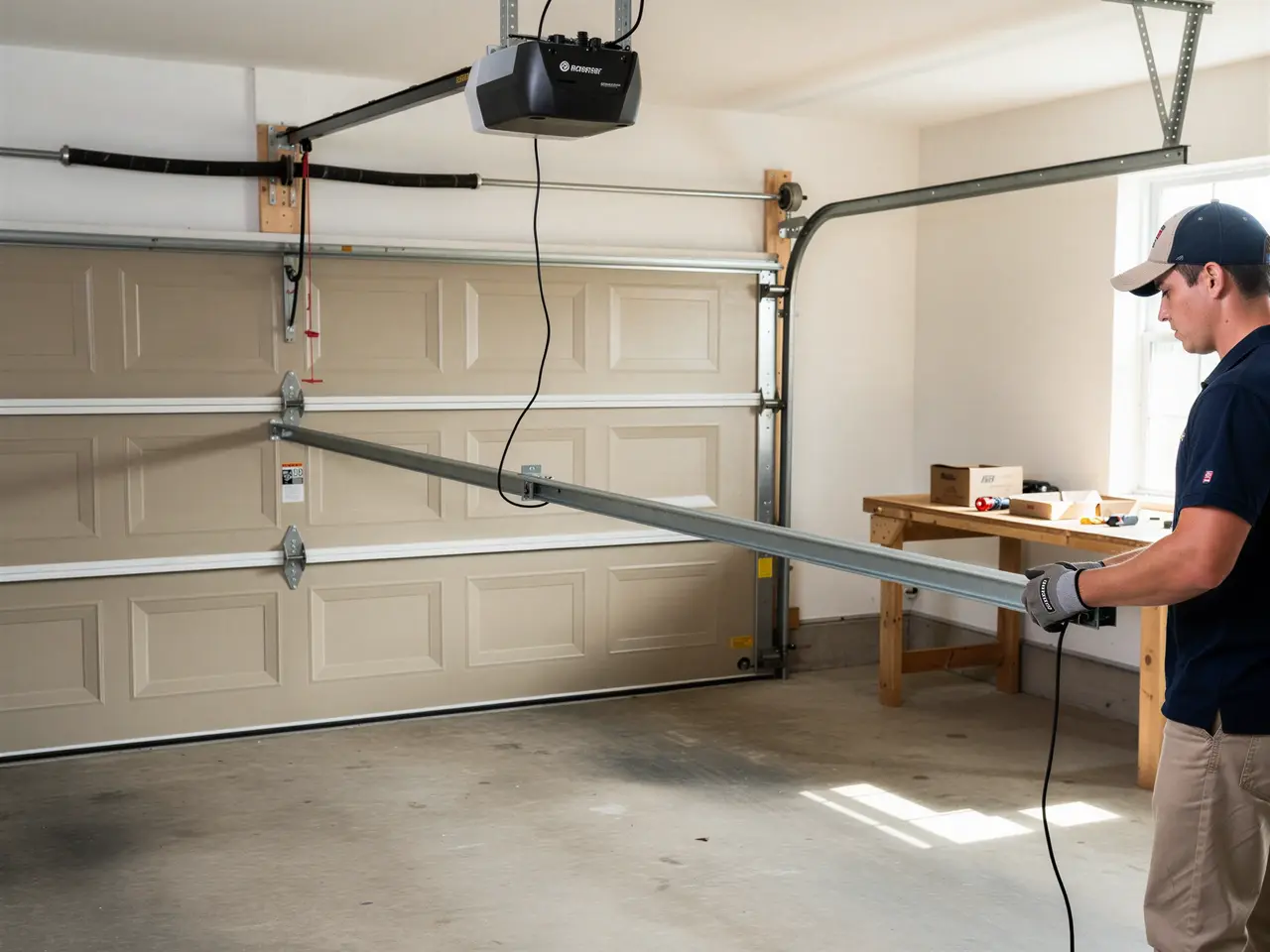
We start by checking what's already there: rail type, header clearance, wiring condition, and sensor height, since a house built around 1987 usually still has its original garage electrical run. If the header and wiring check out, the swap is straightforward - new opener, new rail if needed, sensors reset to current height, travel limits and force settings dialed in so the door doesn't slam or stall. If the header isn't square to the door or the bracket won't hold a heavier modern unit, we build out a mounting plate before the opener goes up, not after. We come from Bloomington, about 9 miles out, so we schedule the visit rather than drop in same-day - that's worth knowing before you plan around us.
What Causes It Around Here
Winters in this part of Illinois sit in a cold, moderate climate band, and an opener in an unheated or semi-heated garage works harder in January than July - the motor draws more to overcome stiff grease and a heavier door, and that load adds up over years faster than owners expect. Combine that with a typical install age pushing past 30 years in a house built around 1987, and you get openers that technically still run but strain on every cold start. It's not dramatic failure, it's slow fatigue, and it tends to surface in the coldest stretch of winter when you're least prepared to deal with it.
The DIY Question
Swapping an opener on a reasonably accessible ceiling with standard wiring is a job some owners manage themselves, and we're not going to pretend otherwise. Where it goes wrong is the safety sensor alignment and the force-limit setting - get those wrong and you've got a door that either won't reverse when it should, or reverses when it shouldn't. If your house has the vaulted-ceiling garage layout common in Hudson's late-80s builds, the header work alone is reason enough to hand it off. We'd rather tell you that upfront than have you call us after a DIY install that technically runs but fails a safety test.
How Long You Are Without the Door
A straightforward opener swap, where the rail and header are already in good shape, usually means the door is back in operation the same visit - you're without automatic opening for the hours we're on site, not overnight. Where it runs longer is when the header needs reinforcement or the existing wiring doesn't meet current code and has to be redone before the new unit goes in. We won't know which situation you're in until someone's looked at the ceiling and the panel, which is part of why we scope the job before quoting a timeline.
Frequently asked questions
Is my opener old enough to just replace instead of repair?
If your house dates to around 1987, like most of Hudson, your opener is likely original or close to it - past 30 years old. At that age, replacement usually makes more sense than repair, since parts for older logic boards get harder to source and the motor is already working harder in winter than it should.
Do you have a crew based in Hudson?
No. We work out of Bloomington and travel to Hudson, about 9 miles out, for scheduled jobs. We don't keep a branch or truck stationed in town, so plan the install as a scheduled visit rather than an immediate same-day call.
Will a new opener fit my existing rail and bracket?
Often yes, if the house is from the late 1980s build era common here and the header is square. Vaulted-ceiling garages sometimes need a reinforced mounting plate before the new unit goes up - we check that before quoting the job, not after.
Book garage door service in Bloomington
Call now or request a quote - tell us what the door is doing and where you are.