
Bloomington, IL · Garage Door Service
Opener Installation for Le Roy's 1972-Era Garage Doors
Le Roy's houses mostly date to 1972, which means original brackets, headers, and openers that don't match what's sold today. Here's what that means for your install.
- Repairs & new doors
- Springs & openers
- Serving 5 nearby communities
How Long You Are Without the Door
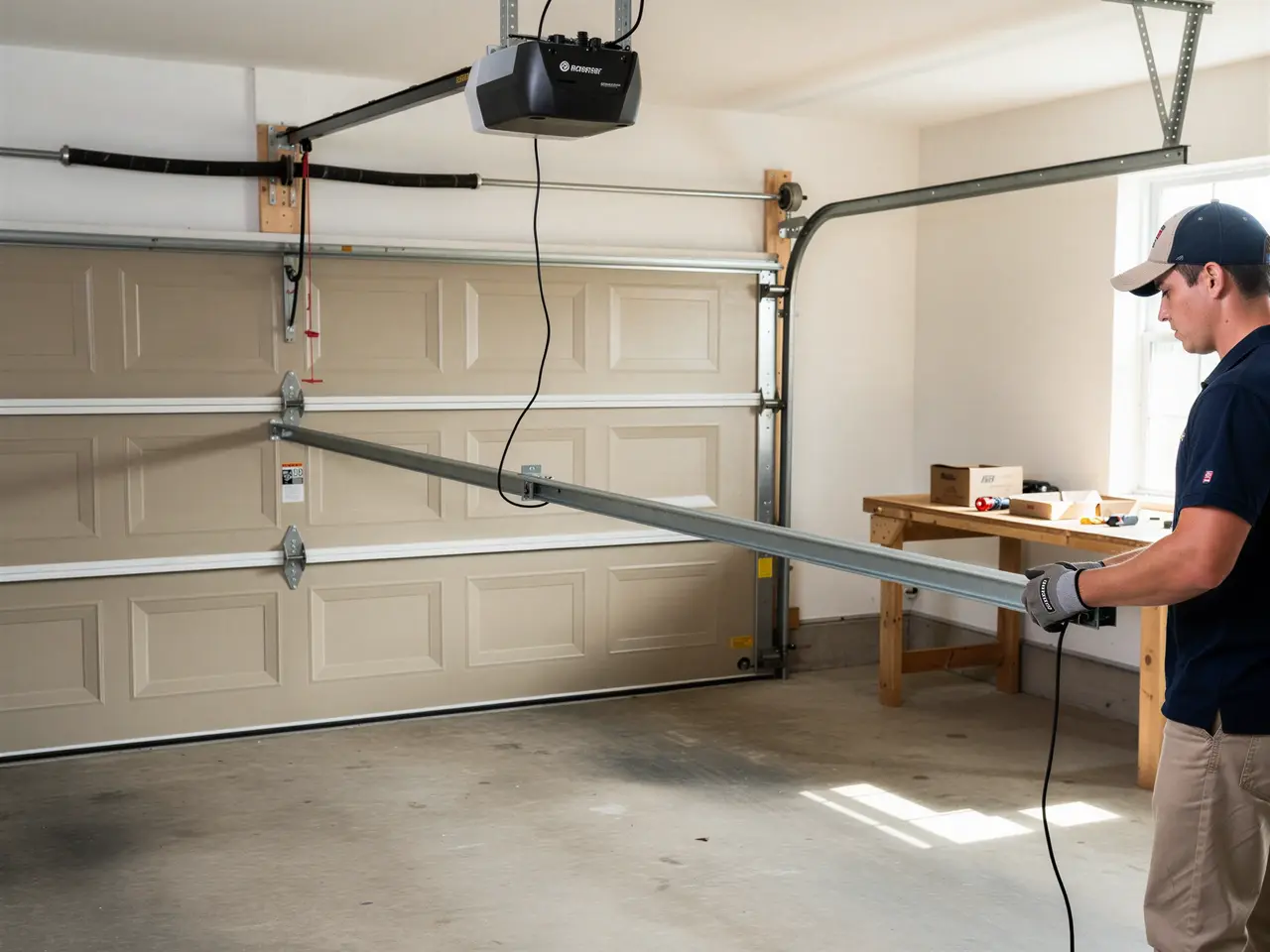
Most garage doors in Le Roy sit on houses built around 1972, the tail end of the township's building boom, and that matters more than people expect once you're swapping the opener. The door itself usually isn't the problem - it's the bracket spacing, the header height, and sometimes a rail that was cut to fit a garage that's a few inches narrower than what a modern opener box assumes.
We come out from Bloomington, and Le Roy sits about 14 miles down the road. That's close enough that a straightforward swap - same rail length, same mount points - gets done in one visit. Where it stretches is when the bracket on a 1972 door doesn't line up with a current opener's mounting kit, or the header behind the door isn't backed the way builders did it then. That's not a same-day fix if the part isn't already in the truck. We won't promise a window here that we can't back up without seeing the garage first.
Where This Job Goes Sideways
The thing that catches installers off guard in a town like Le Roy is the header. Houses from 1972 often have the bracket for the opener's rail mounted directly to framing that was never meant to carry a motor unit's weight and vibration - it was built for a door and spring, nothing more. Add an opener built in the last ten years, heavier than what used to sit there, and the header can flex or the lag bolts can pull.
The other spot: sensor brackets. If the door's track was replaced at some point but the opener wasn't, or vice versa, the safety eye brackets end up at mismatched heights relative to the floor, and the opener either won't set or won't hold a reliable beam. On a door this age, you're rarely dealing with a clean, factory-matched set of parts anymore - you're dealing with whatever got swapped in over fifty years, one piece at a time.
How It Shows Up
The call we usually get is some version of: the opener runs but the door doesn't move the way it used to, or it reverses for no reason, or it just stopped responding to the wall switch. On a door from this era, a lot of that traces back to an opener that's simply worn out - chain stretched, drive gear stripped - rather than anything wrong with the door panels or track, which were often built heavier than what goes up today.
Sometimes it's simpler and more worth paying attention to: an opener from decades back may not have a working auto-reverse safety feature at all, or the photo-eye sensors were never retrofitted. If your opener predates sensor-eye requirements and nobody's added them since, that's not a convenience upgrade when you replace it - it's the main reason to replace it.
The DIY Question
Swapping a chain or belt kit yourself is doable if the rail and bracket match what you're installing. Where it stops being a weekend project is anything involving the spring side of the door - torsion springs store enough force to break a hand, and on a door old enough to be original to a 1972 build, you often can't tell its condition just by looking at it.
The honest limit on our end: if your garage was framed for a lighter door and lighter hardware than what's standard now, a straight opener swap sometimes isn't enough on its own - the mounting may need reinforcing first, and that's a conversation worth having before you buy a box off a shelf assuming it'll just bolt up.
What Causes It Around Here
Le Roy's housing stock centers on 1972, which puts most of its garages squarely in the era before auto-reverse safety standards and before today's heavier insulated doors became common. Openers installed back then, or even the first replacement round in the 80s or 90s, were built for lighter doors and simpler duty cycles.
With close to 1,404 households in town and a median income around $87,500, most of what we see isn't deferred maintenance out of necessity - it's an opener that's simply reached the end of its mechanical life after decades of winters. Cold swings put real strain on chain tension and gear wear, and a unit that's limped through enough of those seasons tends to fail at the worst time, not the convenient one.
Frequently asked questions
Will a new opener fit my garage door as-is?
Usually, if your door and rail are still original and undamaged. The exception is a header or bracket that was built light for a 1972-era door - if that's the case, we'll flag it before install rather than bolt a modern unit to framing that won't hold it long-term.
Do you carry parts for older openers on the truck?
We stock common rail and bracket kits, but a door with an unusual mount from decades of parts swaps may need a specific piece ordered. We'll tell you up front if that's the case rather than guess.
Is it worth replacing an opener that still runs?
If it lacks a working safety reverse or photo-eye sensors, yes - that's a safety issue, not just a convenience one. If it runs fine and has sensors, you can often wait until it actually fails.
Book garage door service in Bloomington
Call now or request a quote - tell us what the door is doing and where you are.