Bloomington, IL · Garage Door Service
Garage Door Service for Le Roy, IL
Garage door repair and service for Le Roy, IL, 14 miles from Bloomington, where most homes went up in the early 1970s with original steel doors still on the hinges.
- Repairs & new doors
- Springs & openers
- Serving 5 nearby communities
How Long You Are Without the Door
We run this truck out of Bloomington, 14 miles from Le Roy, so we don't pretend to have a crew sitting on your block. That drive time is worth saying plainly: it's part of the job, not hidden in fine print. What it means for you is that we schedule the trip, not improvise it - if a call comes in mid-morning, we're planning the route out with the rest of the day's jobs in this corner of the service area.
The bigger factor in how long you're stuck is usually the door itself, not the drive. Le Roy's housing stock centers on 1972, and a door that age is either the original steel panel unit or a first replacement from the 80s or 90s. If it's an extension-spring door on an older bracket, we may need to confirm we've got the right length spring on the truck before we commit to a same-visit fix. We'd rather tell you that up front than promise a number we can't back from 14 miles away.
Where This Job Goes Sideways
The jobs that go sideways in Le Roy are almost always the ones where someone's already tried to force a door that's binding. A 1972-era door on worn rollers doesn't jam cleanly - it drags, catches, and if the opener keeps pushing against it, you can bend a track or strip a gear trying to get it open. Once that happens, a $40 roller job turns into a track replacement.
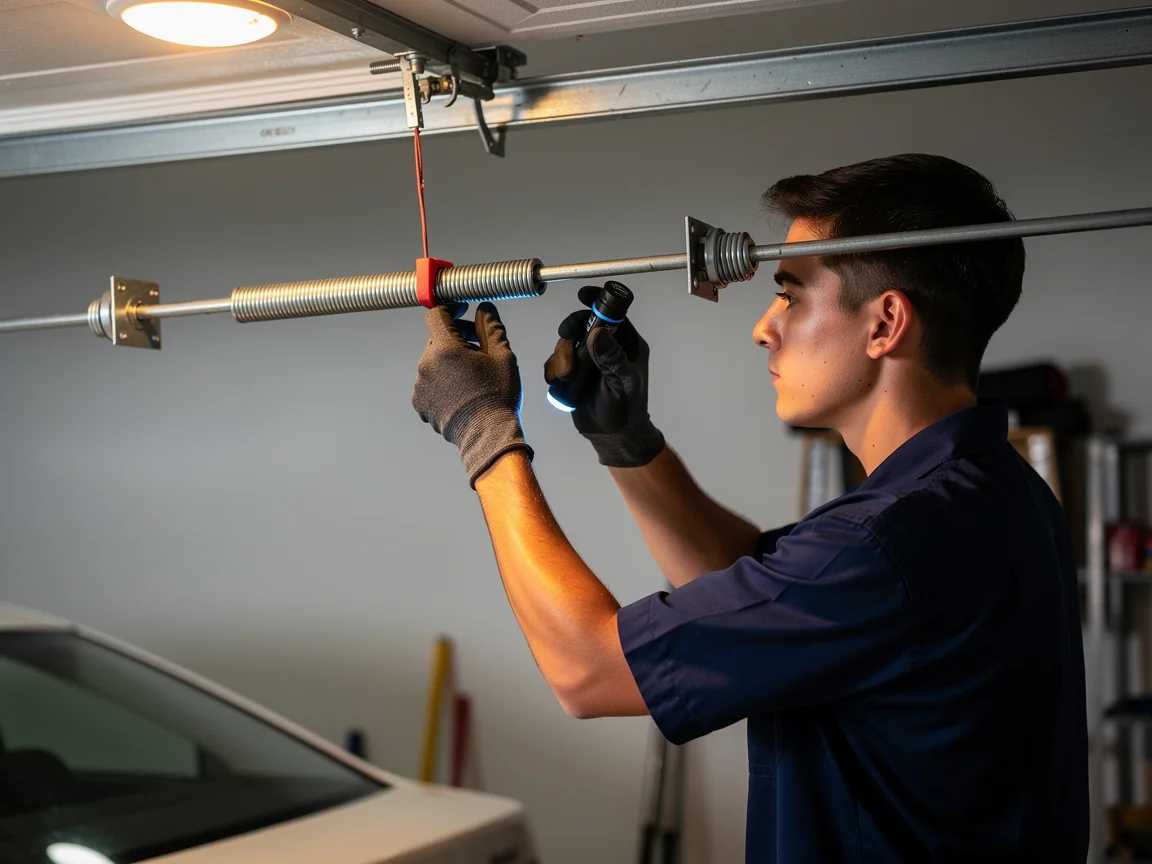
The other place this goes wrong is springs. Extension springs from that build era don't have the safety cables that became standard later, and if one lets go while someone's standing under it, that's not a repair call anymore, that's an injury. We won't touch a door with unsecured extension springs without flagging it first, even if that means the visit takes longer than you expected.
Honest limit: if the track is bent badly enough, or the frame itself has shifted with the house, patching it is a short-term answer. At that point we'll tell you straight that replacement costs less over five years than repeated fixes on a door that's fighting its own frame.
How It Shows Up
Most calls start the same way: the door hesitates on the way up, or it reverses itself a few inches from closing. On a house built around 1972, that's often a spring that's lost tension gradually rather than snapped outright - the opener is doing extra work it wasn't designed to carry, and eventually the motor gives out trying to compensate.
Cold also shows up here in a specific way. This is a moderate-cold climate band, not the harshest winters in the state, but still enough that grease on an older track thickens up and rollers that were already worn start sticking on the first truly cold mornings. If your door's fine in October and rough by December, that's the pattern.
A less common but real symptom: the door looks fine but the opener light clicks without the door moving. That's usually the gear inside the unit, and on an opener old enough to match the house, replacement parts for that exact model may not be on a shelf anymore.
The DIY Question
Tightening loose hardware, lubricating hinges and rollers, and keeping the track clear of debris are fair weekend jobs, and we'd rather you do those than call us for them. What we'd tell you to leave alone is anything involving the spring under tension - on a door this age, that's very likely an extension spring without a safety cable, and it can take a finger or worse if it releases while you're working near it.
The other thing worth knowing before you start: parts for a door and opener from the early 1970s aren't always a straight swap from the hardware store. Bracket spacing, spring length, and drum size varied more then than they do now. If you order the wrong part and force-fit it, you can do more damage to the track than the original problem did. Measure twice, and if you're not sure what you're measuring, that's the point to call rather than guess.
What Causes It Around Here
Le Roy's homes center on a 1972 build year, which puts most garage doors and openers here in that stretch where original hardware is either still in place or was replaced once, decades ago, with whatever matched at the time. That's the root of most service calls: parts designed for a door style that isn't what's sold new anymore.
With 1,404 households in the area and a median income of $87,500, a fair number of these houses have had one or two updates since 1972 but not a full door replacement - new opener, old track, or new springs on an old drum. Mismatched generations of hardware wear unevenly, which is exactly why a door can run fine for years and then fail all at once.
The moderate-cold climate adds a seasonal edge to all of this: metal contracts, old grease stiffens, and a marginal roller or hinge that was holding on through fall gives out in the first cold snap.
Frequently asked questions
Do you have a crew based in Le Roy?
No. We run out of Bloomington, about 14 miles away, and travel to Le Roy for calls. We don't claim a local branch or a guaranteed response window here - we schedule the trip as part of the day's route.
Why does my door from the early 1970s need parts you don't carry on the truck?
Spring length, drum size, and bracket spacing varied more in that era than they do on doors made today. We carry common sizes, but an original 1972 setup sometimes needs a part ordered to match, which can add a day or two.
Is it safe to replace the spring myself on an older door?
Not if it's an extension spring without a safety cable, which is common on doors from this build era. Under tension, that spring can release suddenly. We'd rather you call for that one job and handle the rest yourself.
My door is fine in fall but sticks in winter. Why?
This area sits in a moderate-cold climate band. Grease on older tracks thickens in cold weather, and rollers that are already worn start catching once temperatures drop. It's usually a maintenance fix, not a replacement.
Book garage door service in Bloomington
Call now or request a quote - tell us what the door is doing and where you are.