
Bloomington, IL · Garage Door Service
Garage Door Maintenance for Le Roy, IL Homes
Le Roy homes mostly date to the early 1970s, which brings specific door and spring wear. See what regular upkeep catches before it becomes a bigger repair.
- Repairs & new doors
- Springs & openers
- Serving 5 nearby communities
How Long You Are Without the Door
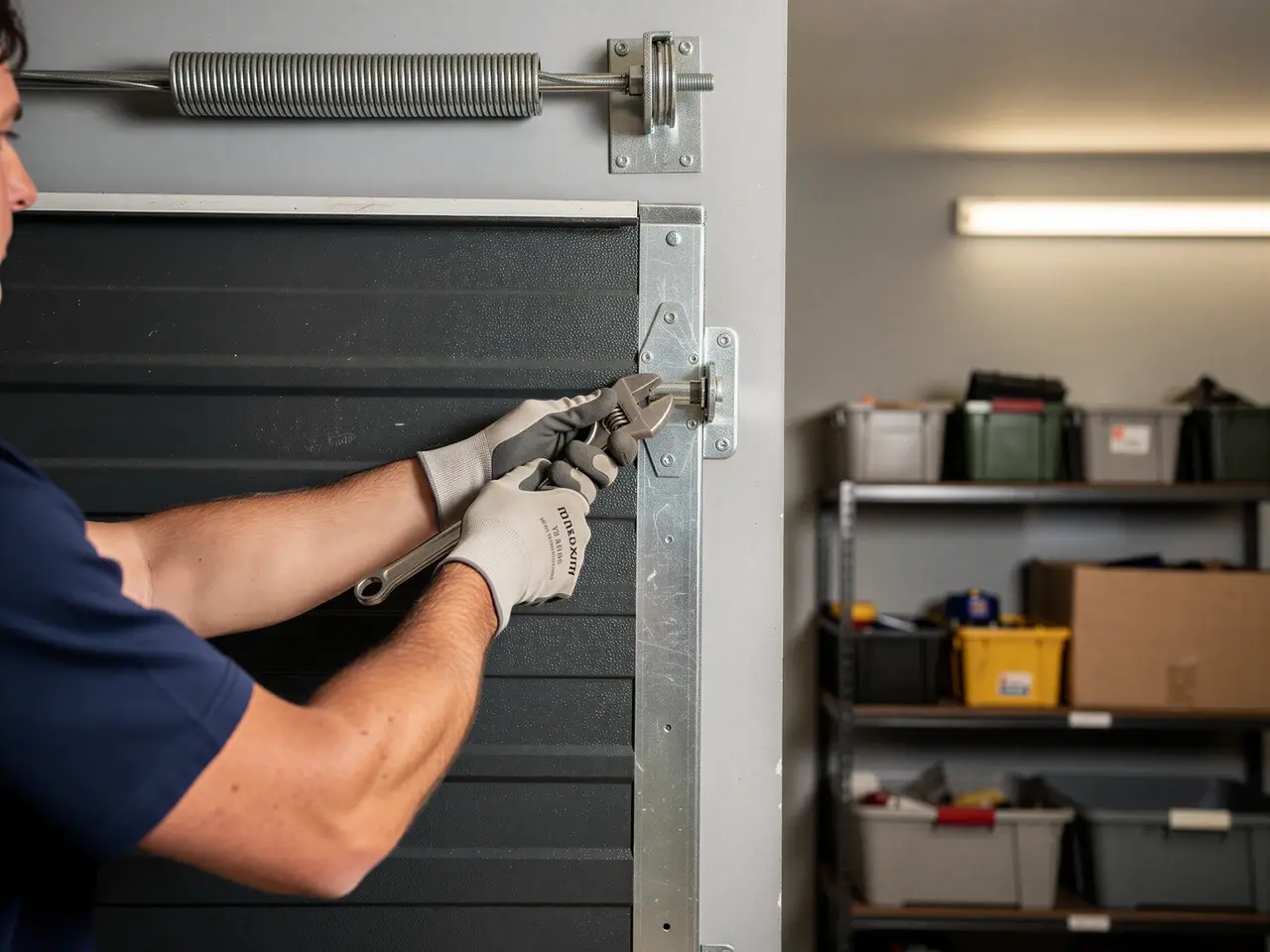
Most garages in Le Roy went up with the house, and the house usually dates to around 1972 - right in the stretch when steel sectional doors were replacing the old single-slab wood ones, and extension springs along the horizontal track were still the standard before torsion bars took over. That's the door you're probably looking at now: a steel sectional, single or double width, running on springs that have been stretching and relaxing for five decades if nobody's swapped them. When one of those doors quits, you're not waiting on a part made specially for your house, but you are waiting on a truck, because Le Roy is about 14 miles out from Bloomington and there's no branch here. A stuck door on a maintenance visit is rare - this is about catching wear before it turns into a stuck door. The honest trade-off: we come through on a route, not a standing schedule, so booking ahead matters more here than it would for a job five minutes from the shop.
Where This Job Goes Sideways
The spot this goes wrong most is the spring. A door built around 1972 with its original extension springs has had roughly fifty winters of expansion and contraction, and extension springs don't give much warning before they let go - unlike torsion springs, which tend to fray visibly first. The second spot is the track hardware: steel brackets from that era weren't galvanized the way current parts are, so rust sets into the mounting bolts and the hinges before it's obvious from the floor. We'll say plainly what we don't do: if a panel is rusted through at the bottom rail, maintenance won't fix that, and we'll tell you replacement is the better money rather than patching a panel that'll fail again next season. We also don't stock parts on the truck for doors built before the mid-1980s mounting standard changed - if yours needs an older bracket pattern, that can mean a short wait on the part, not same-day.
How It Shows Up
On a 1970s door, the first sign is almost always sound, not motion: a grinding or popping near the spring mount as the door lifts, which usually means the spring has lost tension unevenly on one side. After that you'll notice the door drifting out of level as it closes, or the opener straining and reversing partway down because it's compensating for a spring that isn't carrying its share of the weight anymore. Rollers on original steel track tend to flat-spot rather than wear round, so a door that used to glide starts to thump at the same two or three points every cycle - that's usually the roller, not the opener. None of these fail the door outright right away, which is exactly why they go unaddressed in houses this age: the door still opens, so nobody looks closer, until the day the spring finally lets go.
The DIY Question
Lubricating hinges and rollers, tightening visible bolts, and checking that the auto-reverse still trips when something's under the door are reasonable for an owner to handle, and doing them twice a year keeps a 1970s-era door running longer than most people expect. What isn't reasonable to do yourself is anything involving the spring itself - extension springs under tension have hurt people, and on a door this age the spring has had decades to develop fatigue you can't see by looking at it. We also wouldn't recommend an owner replacing original hardware mounting points without checking what's behind the jamb, since framing on houses from this build era doesn't always match what a current hardware kit assumes. If you're comfortable with the hinge and roller work, do it - just leave the spring and the track realignment to the call.
What Causes It Around Here
Two things do most of the damage to doors in Le Roy and the towns around it: age and cold. The service area's housing runs mostly 1960s and '70s construction, and a cold-winter climate works harder on that original hardware than a mild one would - steel contracts, grease stiffens, and an extension spring that's already fifty years old loses what little give it had left. Le Roy's own median build year sits at 1972, close to the broader area's 1970 median, so the fault pattern here tracks with what we see across most of the fifteen communities we cover, not something unique to one street. At $87,500, median household income here runs a bit above the wider service area's $83,173, and in practice that shows up as more owners choosing to replace aging hardware outright during a maintenance visit rather than deferring it another winter.
Frequently asked questions
How often should a garage door this old actually get serviced?
Once a year is the minimum for a door built in the early 1970s - twice a year if you want to catch roller and hinge wear before it turns into a spring problem. Original hardware doesn't fail gradually and obviously; it fails abruptly, so the inspection matters more than it would on a newer door.
Do you carry parts for a door this old on the truck?
Standard rollers, hinges, and current-pattern torsion springs, yes. Original 1970s-era mounting brackets or track from before the mid-1980s hardware standard sometimes need to be sourced, which can mean a short wait rather than a same-visit fix.
Is it worth maintaining a door this old instead of replacing it?
Usually yes, if the panels and track are sound - the mechanics on a steel sectional door hold up fine with proper spring and hardware service. If the bottom panel is rusted through or the track is bent, maintenance won't fix that and we'll say so rather than bill for a patch.
Book garage door service in Bloomington
Call now or request a quote - tell us what the door is doing and where you are.